Stories From Story Feast Collective
…and for weekly recipes, interviews, and stories about food, travel, and inspiring people, subscribe to my newsletter What's Good Here.
Recipe: Pear, Caramelized Onion, Walnut & Stilton Tart + The Monastery Method
Recipe: Pear, Caramelized Onion, Walnut & Stilton Tart + The Monastery Method | Story Feast
A savory pear, caramelized onion, walnut, and Stilton puff pastry tart recipe from cookbook author Jody Eddy, paired with the story behind The Monastery Method — 30 days of ancient monastic practices for modern living. Simple, seasonal, and meant to be shared.
Several years ago, I found myself standing at the entrance to Thikse, a Tibetan Buddhist monastery in the Indian Himalayas. My mother had died unexpectedly a few months earlier. I was looking for something I couldn't name. A young monk in burgundy robes gestured for me to follow him to the kitchen, where the morning fire was already burning. He handed me a wooden paddle and showed me how to stir the massive pot of butter tea. We didn't share a language, but we shared the fire, the stirring, the simple, ritualistic task performed the same way it had been performed for centuries.
That trip was the beginning of a journey that would take me to over a dozen monasteries, temples, and spiritual communities across four continents. The research became two cookbooks: Elysian Kitchens for W.W. Norton and Eat Like A Monk for Simon & Schuster. But the wisdom I gathered went far beyond recipes.
What the Monks Taught Me
The practitioners I met weren't escaping the world. They were paying deep attention to it. They had rituals that anchored their days. They ate with presence. They rested without guilt. They worked with their hands. They welcomed strangers. They found joy in simplicity. And they'd been doing this through wars, plagues, famines, and political upheaval for centuries.
When I started teaching workshops based on this research, for Fortune 500 companies, libraries, and community groups, I realized people weren't just interested in the stories. They were looking for the practices. The same questions came up again and again: How do I stay grounded when everything feels chaotic? How do I build routines that actually stick? How do I find meaning when the world feels like it's falling apart?
The Monastery Method
This Is Why I Created The Monastery Method
I distilled everything I've learned from the monks into a 30-day guide: The Monastery Method: 30 Days of Ancient Practices for Modern Living.
It's organized into four weeks:
Foundations (morning rituals, eating with attention, simplicity, gratitude, rest)
Nourishment (food as medicine, wasting nothing, preservation, movement, cooking for others)
Connection (hospitality, listening, service, forgiveness, sacred meals)
Integration (resilience, joy, generosity, designing your own sustainable practice)
Each day includes a story from my travels, the principle behind the practice, concrete steps to try, and reflection questions. It's not religious instruction. It's not wellness fluff. The practices are grounded in tradition, history, and science, and most require around 15 minutes per day. I also included 14 recipes from my cookbooks and downloadable worksheets to help you design your own path forward.
Thirty days is long enough to establish a morning ritual that anchors your day. Long enough to change how you relate to food, rest, and the people around you. Long enough to discover that the peace you've been seeking isn't somewhere else. It's available right here, in the ordinary moments you've been rushing past.
A Monastery Kind of Tart
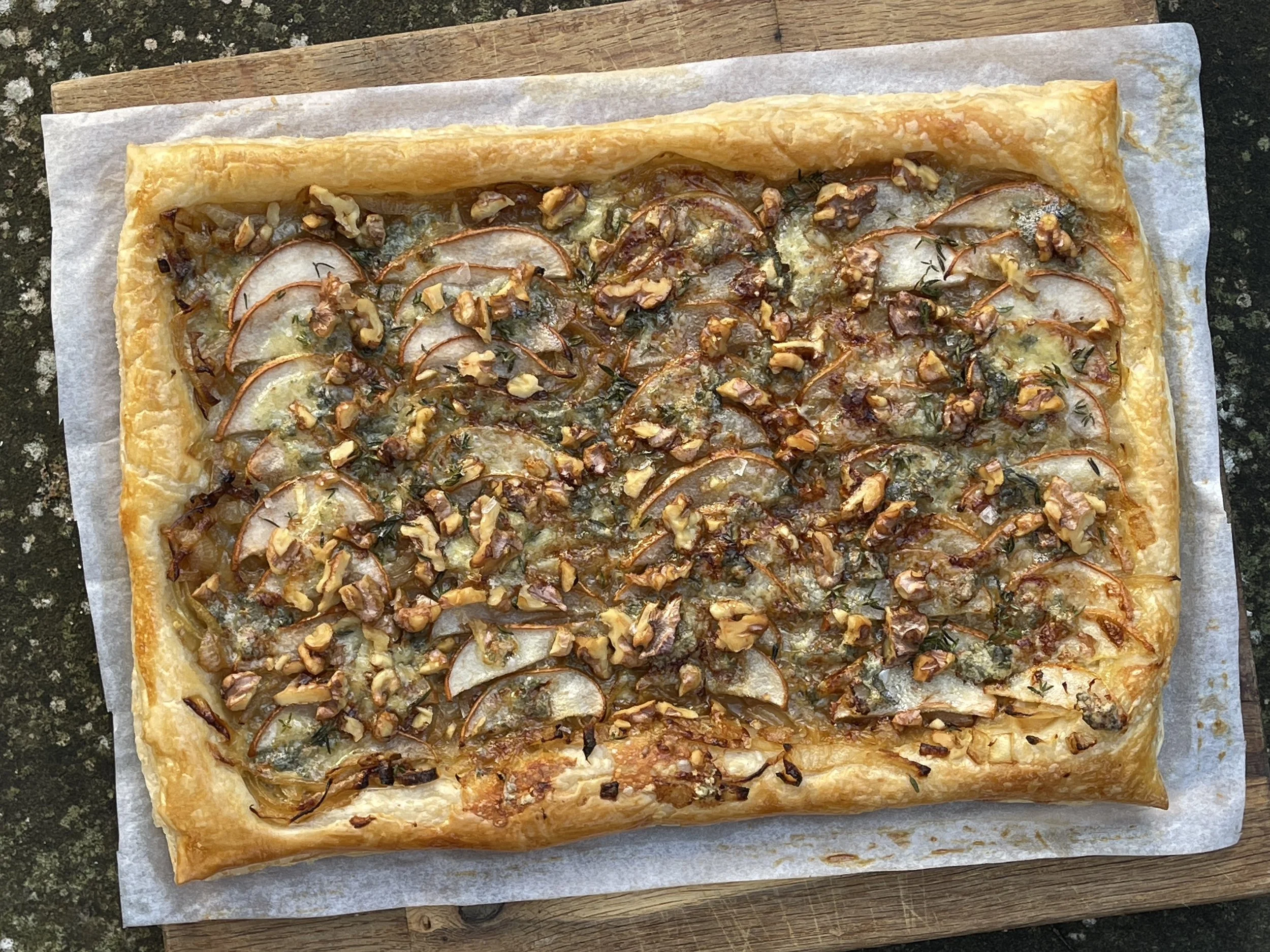
The recipe below reflects the practices in The Monastery Method. This is the kind of dish I make when I want to gather people around a table without spending the whole day in the kitchen. It starts with a single sheet of puff pastry and becomes something that feels special without a lot of effort. The onions caramelize slowly, the pears soften as they bake, the Stilton adds just enough richness and depth without overwhelming. Fresh thyme. A scattering of walnuts. Cut it into six pieces. Set it in the middle of the table. Invite people to gather.
This is monastery cooking to me: not austere, not complicated, but intentional. Food that asks you to slow down long enough to let the onions caramelize. Food that assumes you'll share it.
Pear, Caramelized Onion, Walnut, and Stilton Puff Pastry Tart
Makes 1 large tart (serves 6) Prep Time: 45 minutes
This is the kind of food I return to again and again when I want something that feels both comforting and celebratory without causing me too much trouble. It's something meant to be shared. A single sheet of puff pastry becomes a generous tart, cut into six pieces and set in the middle of the table. The sweetness of caramelized onions and pears, the subtle robustness of toasted walnuts, and the salty depth of Stilton come together in a way that feels fortifying without being heavy.
It's simple to prepare, but it asks for presence: time to let the onions soften and deepen in flavor, to layer thoughtfully, to gather people and pause long enough to eat together. This is the kind of dish I think about when I think about the monasteries. It's not austerity, but nourishment; not complexity, but intention. Food that steadies you, that holds warmth, that reminds you to slow down and share what you have.
Ingredients:
1 sheet (225g/8oz) frozen puff pastry, thawed
2 tbsp (30ml) unsalted butter
2 medium yellow onions, thinly sliced
½ tsp sea salt
¼ tsp freshly ground black pepper
2 medium pears, cored and thinly sliced lengthwise
1 tsp fresh thyme leaves
40g (1½oz) walnuts, roughly chopped
75g (2½oz) Stilton cheese, crumbled (or whatever cheese you prefer)
1 large egg, beaten with 1 tsp cold water
Flaky sea salt, for finishing
Freshly cracked black pepper, for finishing
Method:
Preheat the oven to 400°F (200°C). Line a baking sheet with parchment paper.
Transfer the puff pastry sheet to a baking sheet lined with parchment paper. Using a sharp knife, lightly score a 2cm (¾ inch) border around the edge, being careful not to cut all the way through. Prick the center all over with a fork. Refrigerate while you prepare the toppings.
Melt the butter in a large skillet over medium heat. Add the sliced onions, salt, and black pepper. Cook, stirring occasionally, until soft, deeply golden, and caramelized, about 25–30 minutes. Reduce the heat if they begin to color too quickly. Remove from heat and let cool slightly.
Assemble the tart. Spread the caramelized onions evenly over the center of the puff pastry, staying within the scored border. Arrange the pear slices on top in even rows. Sprinkle with the thyme leaves, followed by the chopped walnuts. Crumble the Stilton over the tart, allowing space for the other flavors to come through.
Brush the border of the puff pastry with the egg wash for a golden finish.
Bake for 25–30 minutes, until the pastry is puffed and deeply golden and the pears are tender. Rotate the pan halfway through if needed for even browning.
Finish and serve. Remove from the oven and let rest for 5–10 minutes. Sprinkle lightly with flaky sea salt and freshly cracked black pepper. Cut into six pieces and serve warm or at room temperature.
This tart is best enjoyed the day it's made, shared slowly, preferably with people you trust and time you've intentionally kept open.
My newsletter
Every Wednesday in my Substack newsletter, What’s Good Here, I share a new, well-tested recipe alongside guides, how-tos, interviews with inspiring people, and stories about what it means to live a good life. Every other Friday I also share five original recipes plus a step-by-step guide to host a Fantasy Feast inspired by your favorite movies, books and television shows.
Subscribe to What's Good Here →
Interested in partnering with us for a future gathering? See partnership opportunities →
Interested in joining a future gathering? See upcoming events →
Drinks: Every Beverage We Served at Our Inaugural Story Feast Gathering
The Drinks Table: Every Beverage We Served at Our Inaugural Story Feast Gathering
From Brother Justus whiskey to Northstar Kombucha, every beverage at our inaugural Story Feast gathering at St. John's Abbey was local, artisan, and chosen to celebrate Minnesota's makers. Alcoholic and nonalcoholic options, no formal pairings, just great drinks for everyone.
At a Story Feast gathering, the drinks matter just as much as the food. Not because we fuss over formal pairings or tell you what to drink with each course. It’s because every bottle, tumbler, and glass on the table tells a story about the place where you're sitting.
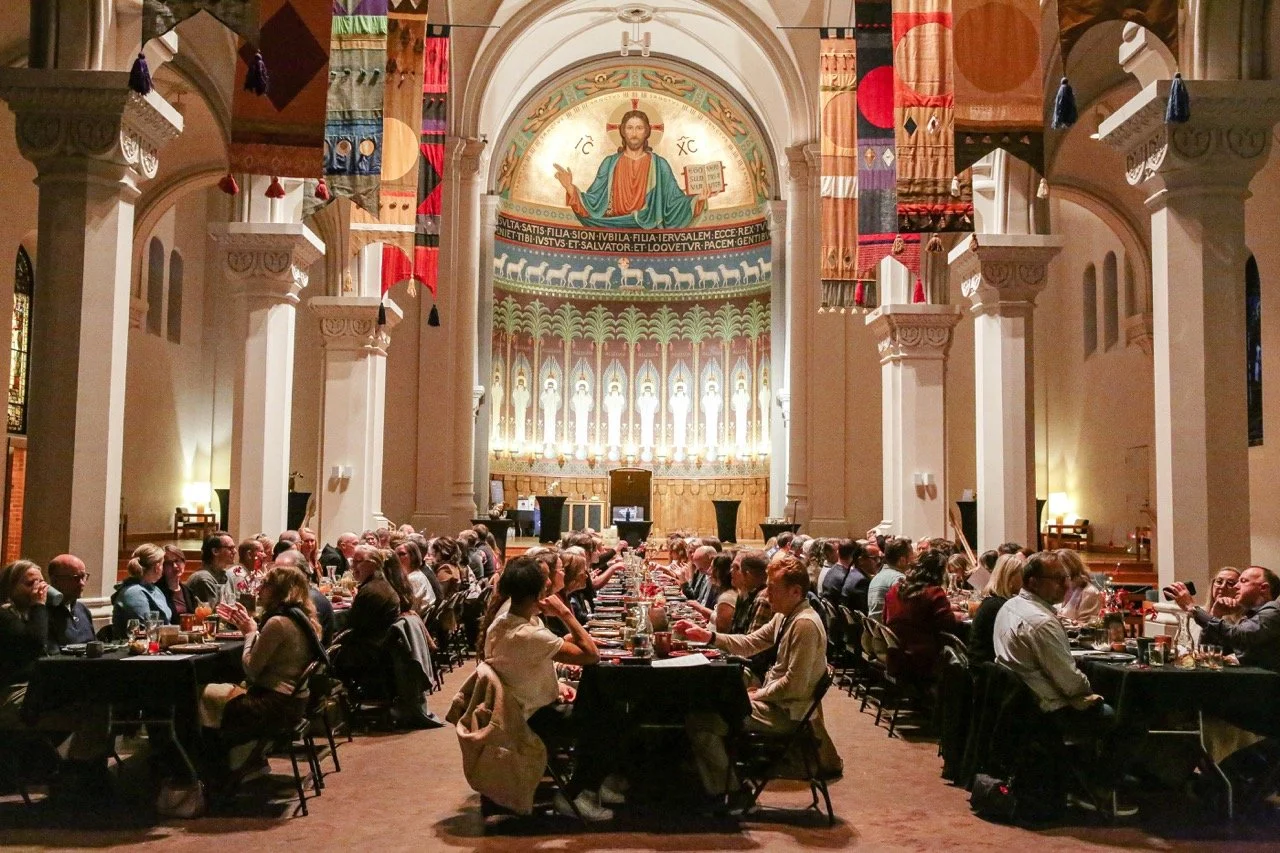
At our inaugural gathering at St. John's Abbey, we wanted the beverage table to feel like a tour of Minnesota's best craft and artisan producers. Whiskey built on Benedictine values. Kombucha brewed in small batches in Minneapolis. Cider pressed from heirloom apples grown just down the road. Wine donated by the monks themselves. A sparkling nonalcoholic beverage developed with Michelin-starred chefs. Craft beer from the Stillwater’s very first taproom.
All of it local or independent. All of it made by people who care deeply about what goes into the bottle.
And all of it available to you, however you wanted it.
There was an open bar throughout the entire Story Feast event
Your Table, Your Way
Here's something we believe in strongly at Story Feast: we don't do formal beverage pairings.
There's no sommelier telling you which glass to reach for with each course. No card at your place setting suggesting the "correct" combination. No pressure to drink alcohol at all.
Instead, we set the table with a generous spread of extraordinary options and let you choose what feels right. Maybe that's a whiskey cocktail during the cocktail hour and kombucha with dinner. Maybe it's cider all night. Maybe it's TÖST from start to finish. Maybe you start with a beer, switch to wine, and end with a Pommeau from Milk & Honey.
We trust you to know what you like. Our job is to make sure every option on the table is worth reaching for, whether it contains alcohol or not. Nonalcoholic beverages aren't an afterthought at Story Feast. They're given the same care, the same quality, and the same prominence as everything else.
Because hospitality means everyone at the table feels celebrated.
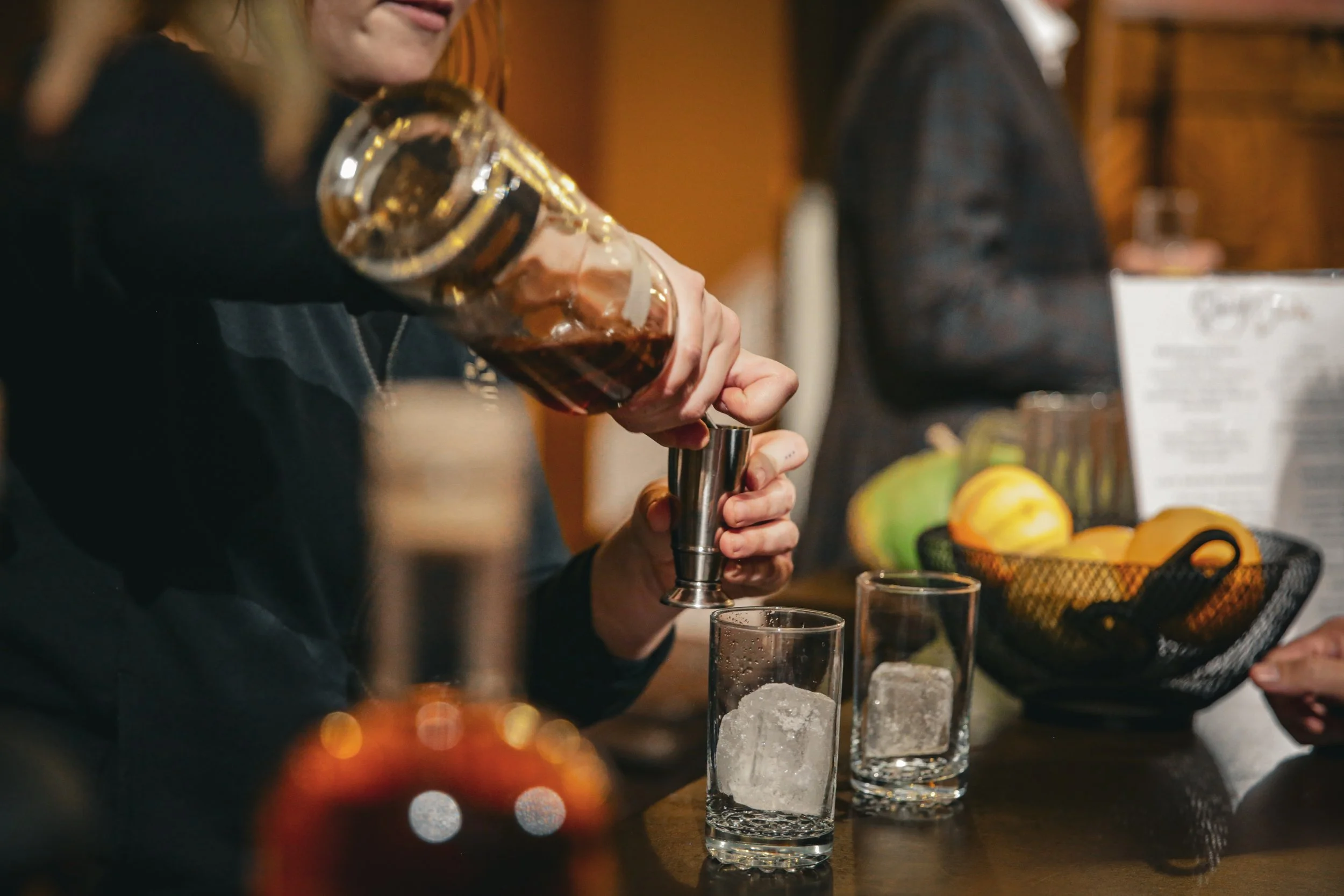
The Brother Justus cocktail being prepared
The Beverages
Brother Justus Whiskey
Brother Justus is Minneapolis-based and Minnesota's first legal whiskey distillery since Prohibition. Founded by Phil Steger, it's built on Benedictine values of community, craftsmanship, and hospitality. These are values that run deep at St. John's, where Phil himself is an alumnus.
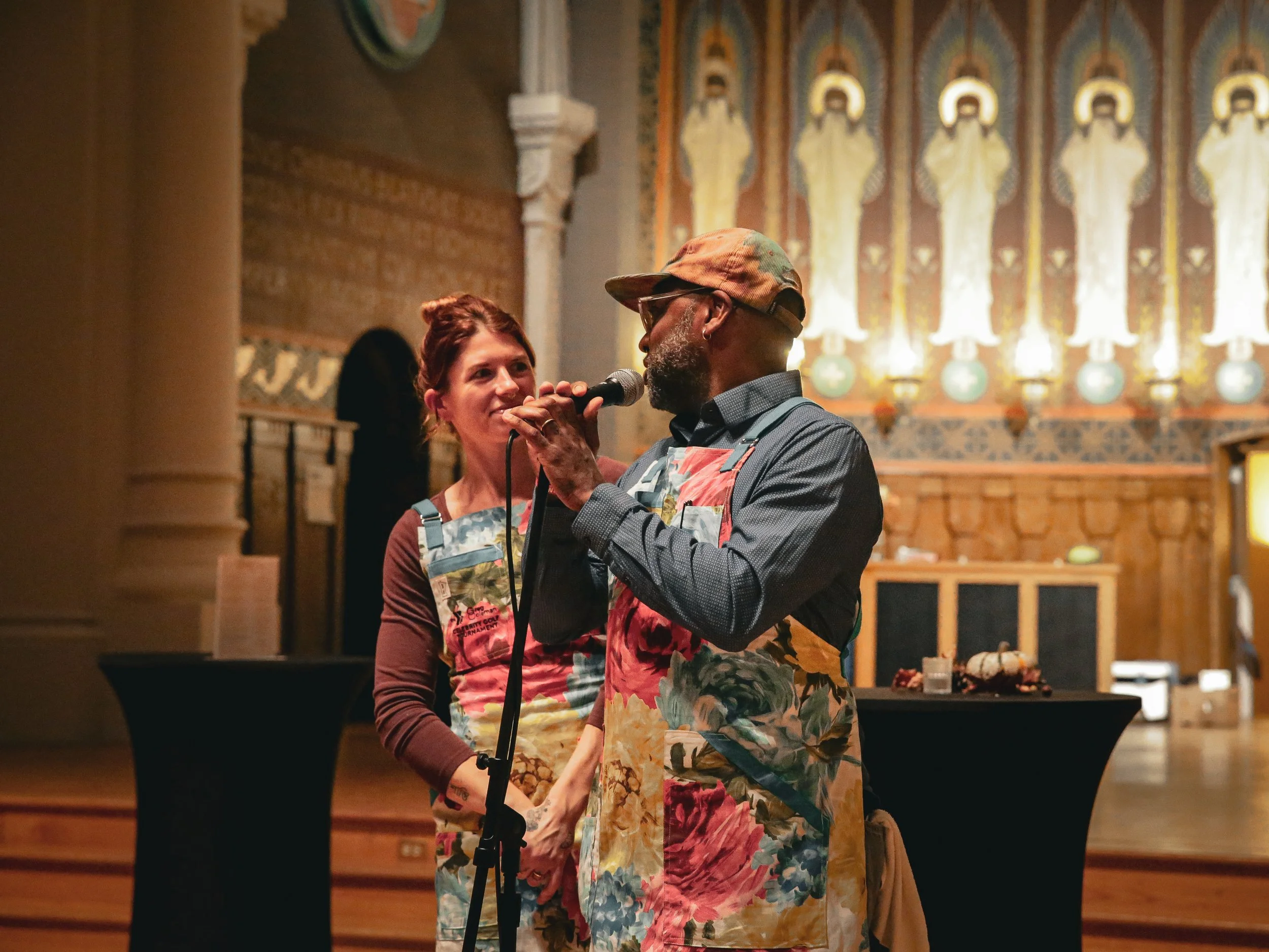
Phil didn't just donate whiskey for our gathering. He showed up in person, poured for guests throughout the evening, and created an original cocktail for the occasion: Vespers, a contemplative mix of Brother Justus American Whiskey, Benedictine liqueur, cream sherry, and mole bitters. The name comes from the evening prayer service observed in monasteries around the world. It was fitting for a meal shared by candlelight in a monastic dining hall. Phil described it as velvety and smooth, with black coffee colour and ruby red refractions in the light.
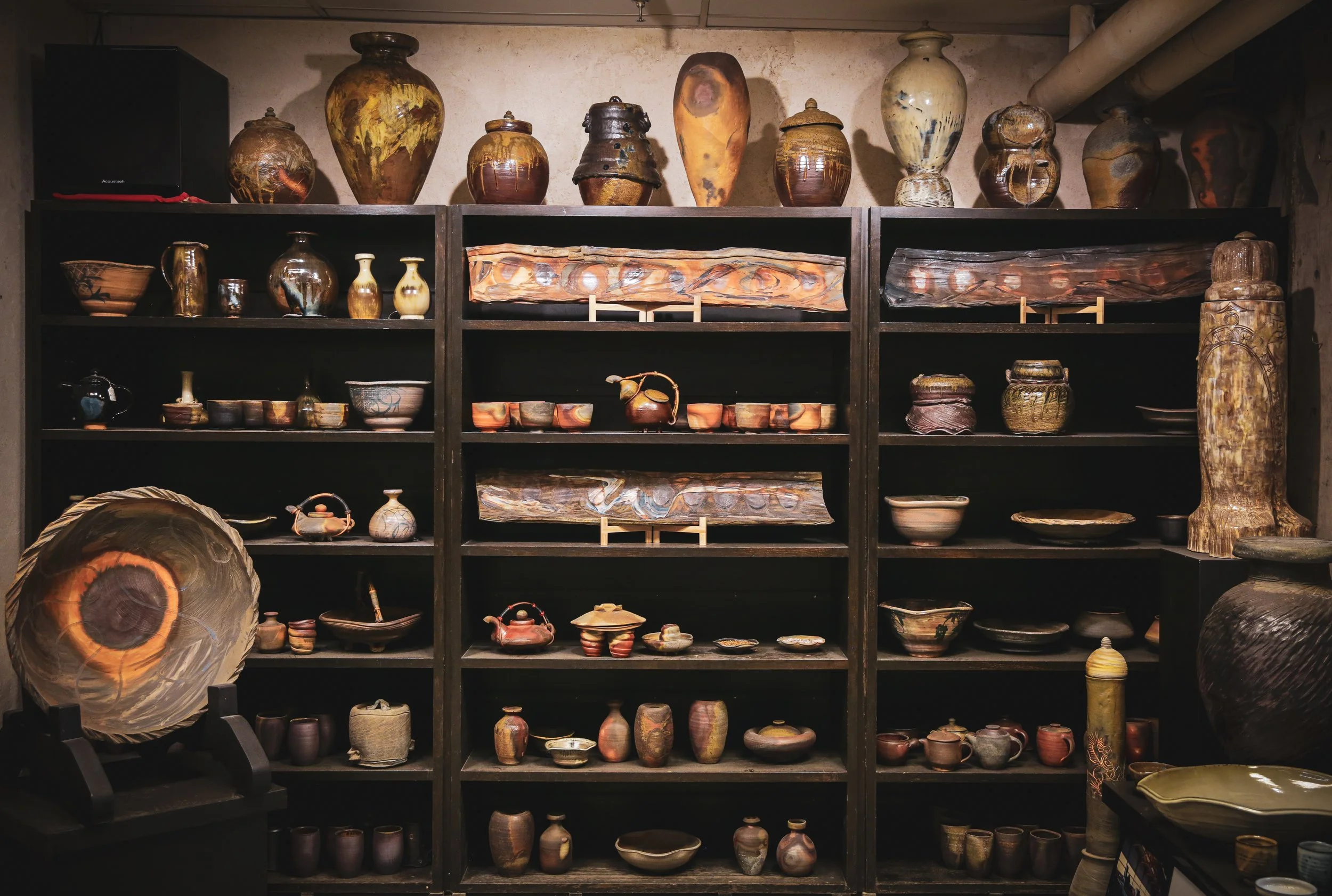
During dinner, Brother Justus whiskey was poured neat into handmade ceramic tumblers crafted specifically for the event by JD and Megan Jorgenson of Maine Prairie Studio. Phil and JD embraced when they saw each other at the gathering. They were old friends, both St. John's alumni, reuniting at a table set with JD's pottery and toasted with Phil's whiskey.
That's the kind of moment that makes Story Feast what it is.
Milk & Honey Ciders
Milk & Honey Ciders sits in the rolling hills of Stearns County, just down the road from St. John's Abbey. Founded by Peter Gillitzer and partners, they make dry, tannic, highly aromatic ciders from heirloom apple varieties with names like Calville Blanc d'Hiver, Arkansas Black, and Kingston Black. Their motto: Let the apples shine.
A few days before the gathering, we drove out to pick up the kegs and ended up staying for a bonfire tasting as the sun dropped behind their orchard. They insisted we take the proper tulip glasses for service, because they care about how their cider is experienced right down to the shape of the glass.
Throughout dinner, guests enjoyed their Estate Cider: dry, aromatic, and a perfect counterpoint to the richness of the harvest menu. After dinner, we poured their Pommeau: a blend of apple brandy and fresh-pressed juice aged two years in barrels. Warm, spiritous, with notes of caramel, oak, and dried fruit. Served neat, in those tulip glasses, exactly as intended.
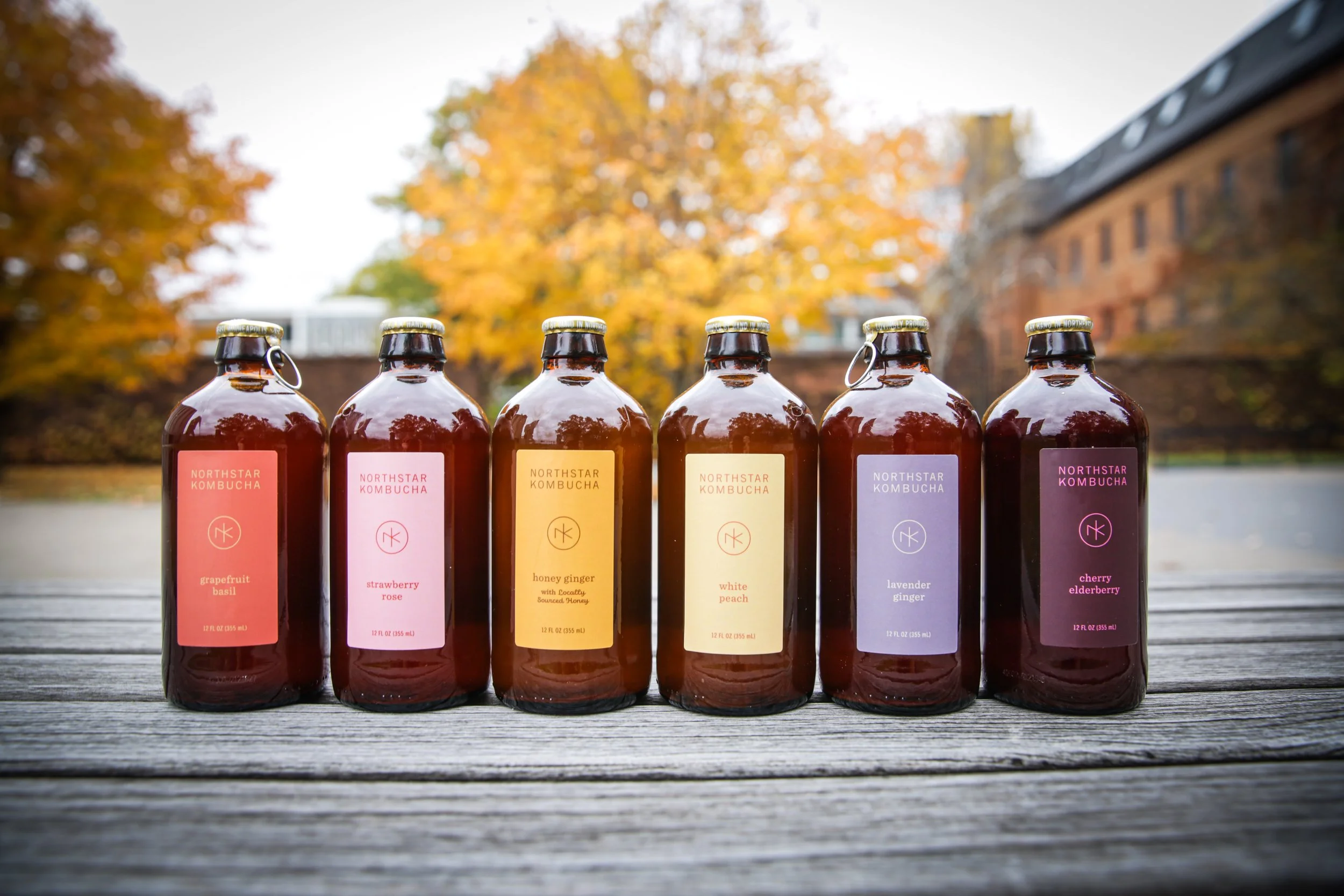
Northstar Kombucha was served throughout the Story Feast dinner and also found its way into the goody bag
Northstar Kombucha
Northstar Kombucha is brewed in small batches in Minneapolis using organic ingredients and live cultures. Their flavors are creative but balanced. It’s the kind of kombucha you actually want to drink, not just tolerate for the health benefits.
Throughout the evening, guests sipped their Raspberry Hibiscus kombucha, bright and refreshing alongside the rich courses coming out of the kitchen. And every goody bag included a bottle in one of their gorgeous flavors: Grapefruit Basil, Lavender Ginger, Strawberry Rose, Cherry Elderberry, Honey Ginger, Blueberry Maple, and more.
Northstar is based in a shared maker space that houses a small community of independent producers, each one crafting something by hand. When I drove over a few days before the event to pick up the kegs and bottles myself, I loved walking through that building. It's what Minnesota's food and beverage scene looks like at its best: collaborative, community-rooted, and absolutely extraordinary.
TÖST being poured during the Story Feast dinner
TÖST
TÖST is a premium nonalcoholic sparkling beverage crafted with white tea, white cranberry, and ginger. It's dry, not sweet and was developed in collaboration with Michelin-starred chefs and James Beard Award winners to pair beautifully with food, just like fine wine.
TÖST was available throughout the cocktail hour and dinner. It gave guests who weren't drinking alcohol something genuinely celebratory to raise. It looked elegant in the glass, tasted wonderful, and offered everyone something special and festive.
Every guest also took home a bottle in their goody bag: a little reminder of the evening and an invitation to recreate that feeling of celebration at their own table.
Lift Bridge Root Beer was served during dinner (along with a selection of Lift Bridge beers) and the root beer also went home with guests in their goody bags
Lift Bridge Brewery
Lift Bridge Brewing Company was founded in 2008 in Stillwater, Minnesota. It’s the first brewery to operate there since Prohibition. When Minnesota changed its laws in 2011 to allow craft breweries to sell pints on-site, Lift Bridge opened the state's very first taproom.
We served a selection of their craft beers throughout the dinner, because this is the Midwest, after all, and great beer belongs at the table. And in every goody bag, guests took home a can of Lift Bridge Root Beer, crafted with the same care as their beer: no shortcuts, no artificial anything, just a delicious old-fashioned root beer that feels like a celebration in itself.
The stained glass honeycomb in the church of St. John’s Abbey
Wine From the Monks of St. John's Abbey
And then there was the wine.
The monks of St. John's Abbey generously donated wine for the gathering. It was a gift that felt deeply meaningful given the setting. Benedictine monasteries have a centuries-long relationship with wine, from the vineyards I visited at Cistercian abbeys in Spain for Elysian Kitchens to the sacramental role wine plays in monastic life around the world.
To have the monks' own wine on the table alongside the harvest feast, in a hall where they've gathered for generations, was a subtle but powerful reminder of where we were and who had welcomed us in.
Why Local and Artisan Matters
Every beverage at our St. John's gathering came from Minnesota or from an independent producer who shares our values. That wasn't a coincidence. It's central to what Story Feast is about.
When we host a gathering, we want the drinks on the table to celebrate the sense of place. We want you to taste where you are. We want to introduce you to makers you might not have discovered otherwise, and to support the small producers who are doing extraordinary work in every region we visit.
At St. John's, that meant whiskey from a distillery built on Benedictine principles, cider pressed from heirloom apples grown a few miles away, kombucha brewed in a Minneapolis maker space, beer from the state's first taproom, and wine from the monks themselves.
At our next gathering, the producers will be different because the place will be different. But the philosophy stays the same: local, artisan, chosen with care, and always with options for everyone at the table.
Because the best drink at a Story Feast gathering is the one you want to be drinking.
My newsletter
Every Wednesday in my Substack newsletter, What’s Good Here, I share a new, well-tested recipe alongside guides, how-tos, interviews with inspiring people, and stories about what it means to live a good life. Every other Friday I also share five original recipes plus a step-by-step guide to host a Fantasy Feast inspired by your favorite movies, books and television shows.
Subscribe to What's Good Here →
Interested in partnering with us for a future gathering? See partnership opportunities →
Interested in joining a future gathering? See upcoming events →
Recipe: Orange-Ginger Olive Oil Cake + Third Places & The Art of Gathering
Third Places and the Art of Gathering | Orange-Ginger Olive Oil Cake Recipe
Why third places matter, what America has lost, and a recipe for orange-ginger olive oil cake from a kitchen in Fes, Morocco. It’s the kind of cake that makes people stay.
In 1989, sociologist Ray Oldenburg gave us a name for something humans have always needed: the third place. Not home. Not work. Somewhere else entirely: the café, the pub, the library, the park bench where strangers become neighbors and neighbors become friends.
I've been thinking about third places constantly lately. After six years living throughout Europe in Ireland, Prague, Normandy, Portugal, I've come to understand what America has lost. The tables spilling onto sidewalks. The unhurried afternoons. The way a Tuesday in a European plaza can feel like a celebration simply because people have gathered, without agenda, without rushing, without clutching paper cups on their way somewhere else.
When I returned to the U.S. recently, the absence was glaring. Where were the gathering places? In their place: drive-throughs, parking lots, the lonely choreography of errands.
This is why Story Feast exists.
Every gathering we host in monasteries, castles, art museums, hidden spaces around the world, is an attempt to rebuild what we've lost. Long communal tables. Family-style service. Four or five hours where no one checks the time. Strangers becoming friends over food that someone cared enough to make extraordinary.
We can't fix everything that's broken. But we can create spaces where people sit together, pass dishes, tell stories, and remember what it feels like to belong somewhere.
I wrote more about all of this including a deeper exploration about what third places are, the data on loneliness, the decline of libraries and VFW halls and bowling leagues, what I've witnessed in Europe, and what I think we can do about it. It’s all in my latest newsletter. It's one of the most personal things I've written in a while.
A Third Place Kind of Cake
The recipe below comes from a kitchen in the medina of Fes, where I stood shoulder to shoulder with a woman named Nabila while she taught me to make it. Her kitchen was tiny. The generosity of the space was enormous because of what she put into it and what she expected from it: that people would come, sit, eat, stay.
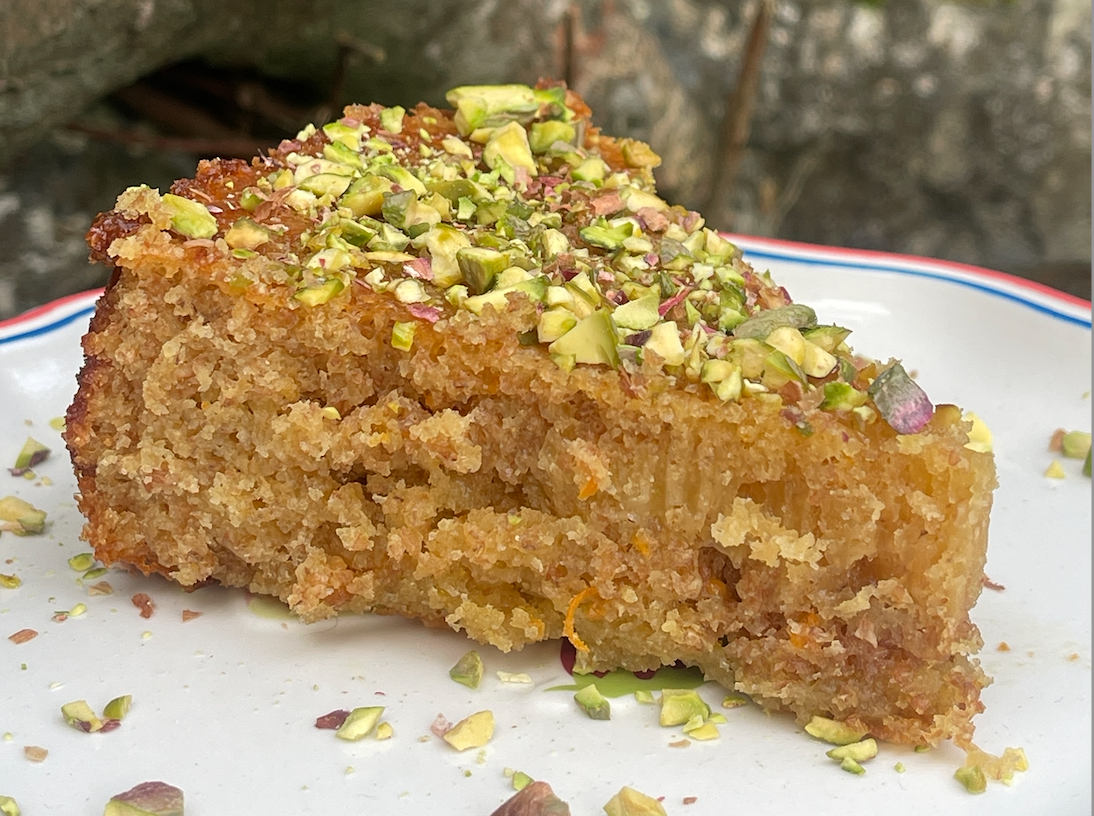
This is that kind of cake. The kind you set on a table and watch disappear slice by slice while conversation deepens and no one checks the time. The olive oil makes it impossibly tender. The pistachios give it a faintly green-gold interior. The orange blossom water, if you use it, makes the whole thing bloom into something you'll dream about later.
It's better on the second day. It keeps beautifully. It's the thing you make when you want someone to stay longer.
Orange-Ginger Olive Oil Cake with Pistachios and Orange Blossom Water
Makes 1 large cake (serves 8-10)Prep Time: 20 minutes | Bake Time: 45-50 minutes
Ingredients:
120g / 1 cup whole wheat flour
60g / ½ cup self-rising flour
75g / ¾ cup ground pistachios
½ tsp fine sea salt
1 tsp ground ginger
3 large eggs, at room temperature
200g / 1 cup granulated sugar
Zest of 2 medium oranges
Zest of 1 lemon
180ml / ¾ cup extra virgin olive oil
120ml / ½ cup freshly squeezed orange juice (about 2 small oranges)
1 tbsp / 15ml orange blossom water (optional but highly recommended)
1 tsp vanilla extract
50g / ⅓ cup roughly chopped pistachios, for finishing
Method:
Preheat the oven to 175°C / 350°F. Grease a 23cm / 9-inch round cake pan and line the bottom with parchment paper.
Sift together both flours, the ground pistachios, salt, and ginger in a medium bowl and set aside.
In a large bowl, beat the eggs and sugar together with a whisk or hand mixer until the mixture is pale, thick, and falls from the whisk in a slow ribbon, about 3 minutes of vigorous whisking by hand or 2 minutes with a mixer. Add the orange zest and lemon zest and whisk until fragrant and slightly golden.
Drizzle in the olive oil in a slow, steady stream, whisking continuously, then add the orange juice, the orange blossom water if using, and the vanilla extract, whisking until smooth and emulsified. The batter should be glossy.
Add the dry ingredients in two additions, folding gently with a spatula each time until just combined. The batter will be quite liquid and pourable, this is exactly right.
Pour into the prepared pan and tap gently against the counter to release any large air bubbles.
Bake for 45 to 50 minutes, until the top is deeply golden and a skewer inserted into the center comes out clean or with only a few moist crumbs. The cake will dome slightly and settle as it cools.
Let cool in the pan for at least 20 minutes before turning out onto a serving plate. Scatter the chopped pistachios across the top, pressing gently so they adhere. Sprinkle with additional orange zest for color.
This cake keeps well in an airtight container at room temperature for up to 4 days… it's almost better on the second day when the crumb has fully absorbed the olive oil and the citrus has mellowed into something rounder and warmer.
My newsletter
Every Wednesday in my Substack newsletter, What’s Good Here, I share a new, well-tested recipe alongside guides, how-tos, interviews with inspiring people, and stories about what it means to live a good life. Every other Friday I also share five original recipes plus a step-by-step guide to host a Fantasy Feast inspired by your favorite movies, books and television shows.
Subscribe to What's Good Here →
Interested in partnering with us for a future gathering? See partnership opportunities →
Interested in joining a future gathering? See upcoming events →