Stories From Story Feast Collective
…and for weekly recipes, interviews, and stories about food, travel, and inspiring people, subscribe to my newsletter What's Good Here.
Tour Spotlight: Organ Building & Woodworking at St. John's Abbey
Organ Building & Woodworking Tour at St. John's Abbey for Story Feast
Before dinner, guests toured Abbey Woodworking and the new organ building workshop, where a thousand-year Benedictine tradition is alive and thriving. A look inside one of our Story Feast tours.
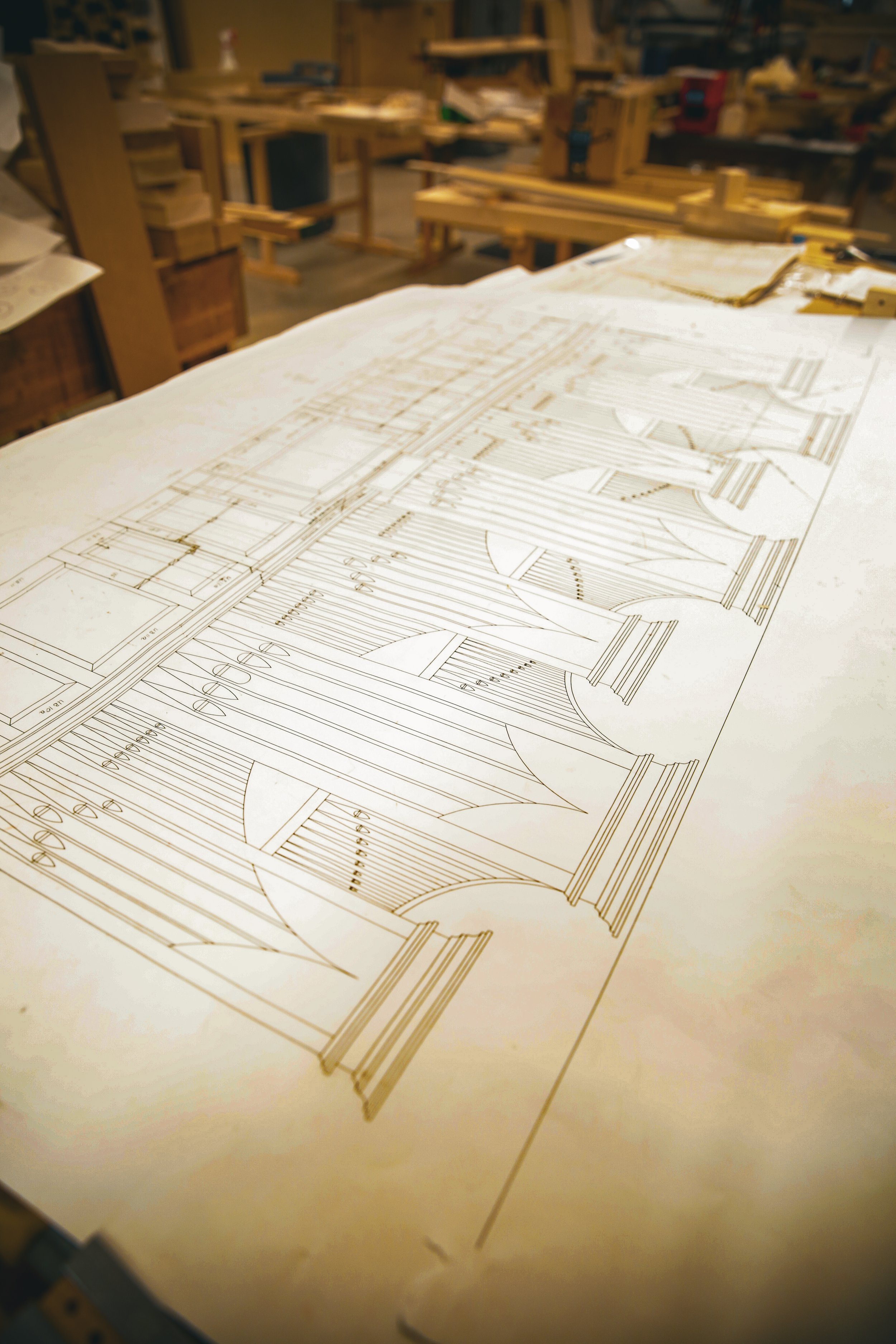
An organ blueprint at St. John’s Abbey
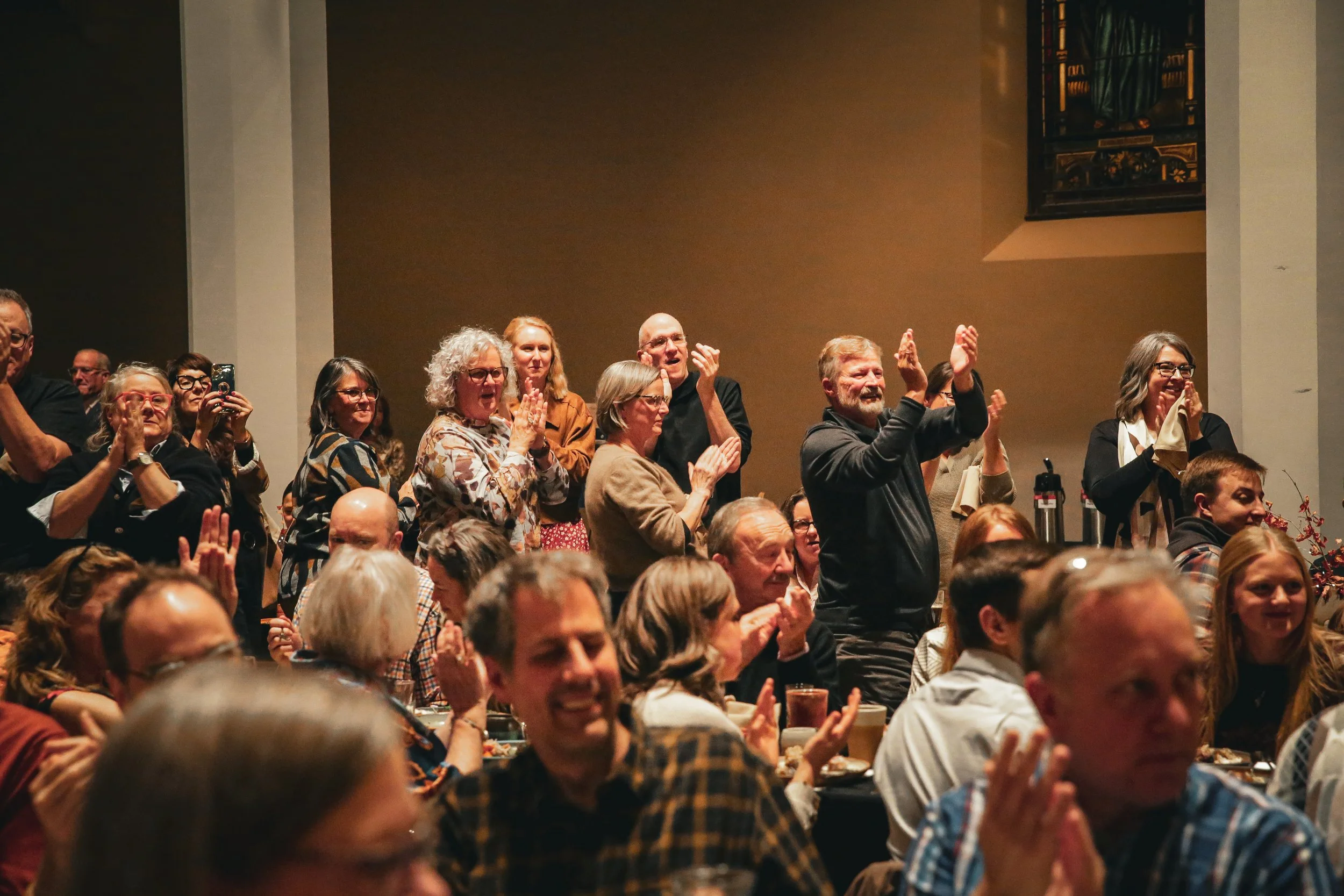
A behind-the-scenes tour at our inaugural Story Feast gathering
Every Story Feast gathering includes more than a meal and a cocktail hour. We invite guests to explore the places where they dine, to understand what makes them extraordinary. At St. John's Abbey, that meant offering three optional tours before the cocktail hour. Every single one filled to capacity.
This is what we love about Story Feast guests: you come curious!
A Thousand Years of Benedictine Craft
The tour of Abbey Woodworking and the new organ building workshop wasn't just a behind-the-scenes look at a facility. It was a window into a tradition that reaches back more than a millennium.
Benedictine monks have been building pipe organs since at least the ninth century. As they spread across Europe, they carried with them not only prayer and scripture, but practical arts: bronze-casting, glass-making, wood-carving, and organ building. The monastery was a place of learning and making, where skills were passed from master to apprentice, and craft was considered a form of devotion.
Ora et Labora, pray and work, is the Benedictine motto. At St. John's, the two have never been separate.
The Workshop
Abbey Woodworking has operated at St. John's since the monastery's founding in 1856. The monks harvest lumber from their own 3,000 acres of forest, mill it on site, and build furniture that lasts for generations. Pieces made over 90 years ago are still in daily use.
In 2023, a brand new 30,000-square-foot woodshop opened, and with it, something remarkable: Saint John's Abbey Organ Builders, a world-class organ building workshop led by Austrian-born master builder Martin Pasi.
Pasi is among a small group of builders worldwide who create mechanical-action pipe organs entirely by hand, using methods unchanged for centuries. Every pipe is cast from molten lead. Every key is carved from cow bone. Every component is made in-house, one organ at a time.
He came to St. John's in 2019 to install an expansion of the Abbey church's organ, adding nearly 3,000 new pipes to the original 1961 instrument. During those seven months, he fell in love with the place. When he heard the monks were planning a new woodshop, he proposed something bold: merge his life's work with theirs.
Now, Pasi and his team build organs in Collegeville, training the next generation of builders in a craft that might otherwise disappear.
The woodworking shop at St. John’s Abbey
What Guests Experienced
On the evening of our gathering, guests walked through the new facility with members of the team. They saw raw lumber stacked for drying, tools arranged with monastic precision, and pipes in various stages of completion. They heard stories about the organs Pasi has built, for cathedrals in Omaha, Houston, and Cincinnati, and about the abbey's long history of making things by hand.
They also heard something harder to articulate: the quiet hum of a place where work is done slowly, carefully, and with intention.
Visit St. John’s Abbey Organ Builders →
Looking Ahead: 2026–2027 Season
For our upcoming season, Story Feast tours will be even more expansive. You'll have the option to spend a few days, or just one, or even just an hour, (or none at all if you’re strictly there for the feast!) immersing yourself in a place. Visiting off-site locations that tell the story of a location. Meeting the makers. Understanding the sense of place and identity that makes each location extraordinary.
Because a great meal isn't just about what's on the plate. It's about where you are, who made it, and what that place means.
My newsletter
Every Wednesday in my Substack newsletter, What’s Good Here, I share a new, well-tested recipe alongside guides, how-tos, interviews with inspiring people, and stories about what it means to live a good life. Every other Friday I also share five original recipes plus a step-by-step guide to host a Fantasy Feast inspired by your favorite movies, books and television shows.
Subscribe to What's Good Here →
Interested in partnering with us for a future gathering? See partnership opportunities →
Interested in joining a future gathering? See upcoming events →
Partner Spotlight: Milk & Honey Cider At St. John’s Abbey
Milk & Honey Ciders at Story Feast’s Inaugural Event
We picked up kegs, Pommeau, and tulip glasses… and stayed for a cider tasting by the bonfire. A spotlight on Milk & Honey Ciders, our partner at St. John's Abbey.
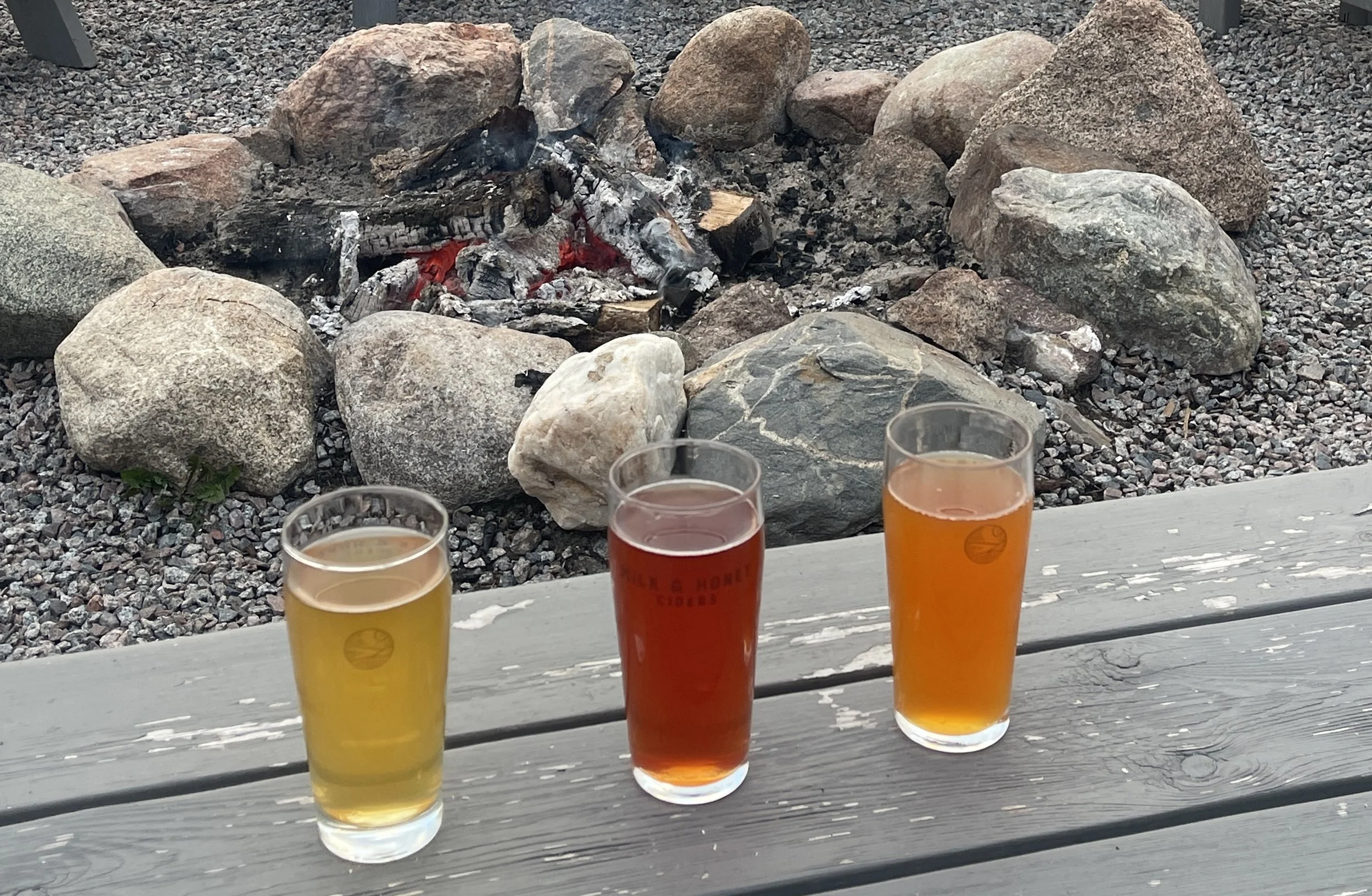
A cider tasting at Milk & Honey Cider, photo: Jody Eddy
Some partnerships begin with an email. This one began with a bonfire.
A few days before our gathering at St. John's Abbey, we drove out to Milk & Honey Ciders, which is just down the road from the abbey, to pick up their contribution to the evening: kegs of their Estate Cider, bottles of their Pommeau, and, at their insistence, the proper tulip glasses to serve it in. They care about how their cider is experienced right down to the shape of the glass.
What I didn't expect was to stay for a tasting by the bonfire.
The Cidery
Milk & Honey sits in the rolling hills of Stearns County, just north of St. Joseph, Minnesota. The taproom overlooks their orchard, rows and rows of heirloom and traditional cider apple trees stretching toward open fields. It's the kind of place where you're invited to walk the grounds, watch the pressing operation, and settle in with a flight while the afternoon disappears.
Founded by Peter Gillitzer and partners, Milk & Honey focuses on dry, tannic, highly aromatic ciders made with minimal intervention. They source heirloom varieties from across the country, apples with names like Calville Blanc d'Hiver, Arkansas Black, and Kingston Black, and blend across multiple years of production. The result is cider that tastes like wine: complex, layered, meant to be savored.
Their motto: Let the apples shine.
That Afternoon
We arrived to pick up the kegs and ended up by the bonfire, tasting few of their crisp, refreshing ciders as the sun dropped behind the orchard. We talked about cider, about community, about what it means to make something by hand in a world that rewards speed.
The next day, they'd be pressing apples in the production room, fruit already harvested, the whole space fragrant with the aroma of bright, fresh apples. I wished I could stay for that. Next time.
Milk & Honey Cider, photo: Jody Eddy
What We Served
At St. John's Abbey, guests enjoyed Milk & Honey's Estate Cider throughout the evening. It’s dry, aromatic, and a perfect counterpoint to the richness of the meal. After dinner, we poured their Pommeau: a blend of apple brandy and fresh-pressed juice aged two years in barrels. Warm, spiritous, with notes of caramel, oak, and dried fruit. Served neat, in those tulip glasses, exactly as intended.
Visit Milk & Honey
The taproom is open Thursday through Sunday, year-round. Bring your own food, order a flight, and settle in. Each season offers something different: cozy winters by the fire, fall harvest energy, summer evenings on the patio. It's worth the drive.
My newsletter
Every Wednesday in my Substack newsletter, What’s Good Here, I share a new, well-tested recipe alongside guides, how-tos, interviews with inspiring people, and stories about what it means to live a good life. Every other Friday I also share five original recipes plus a step-by-step guide to host a Fantasy Feast inspired by your favorite movies, books and television shows.
Subscribe to What's Good Here →
Interested in partnering with us for a future gathering? See partnership opportunities →
Interested in joining a future gathering? See upcoming events →