Tour Spotlight: The Saint John's Pottery
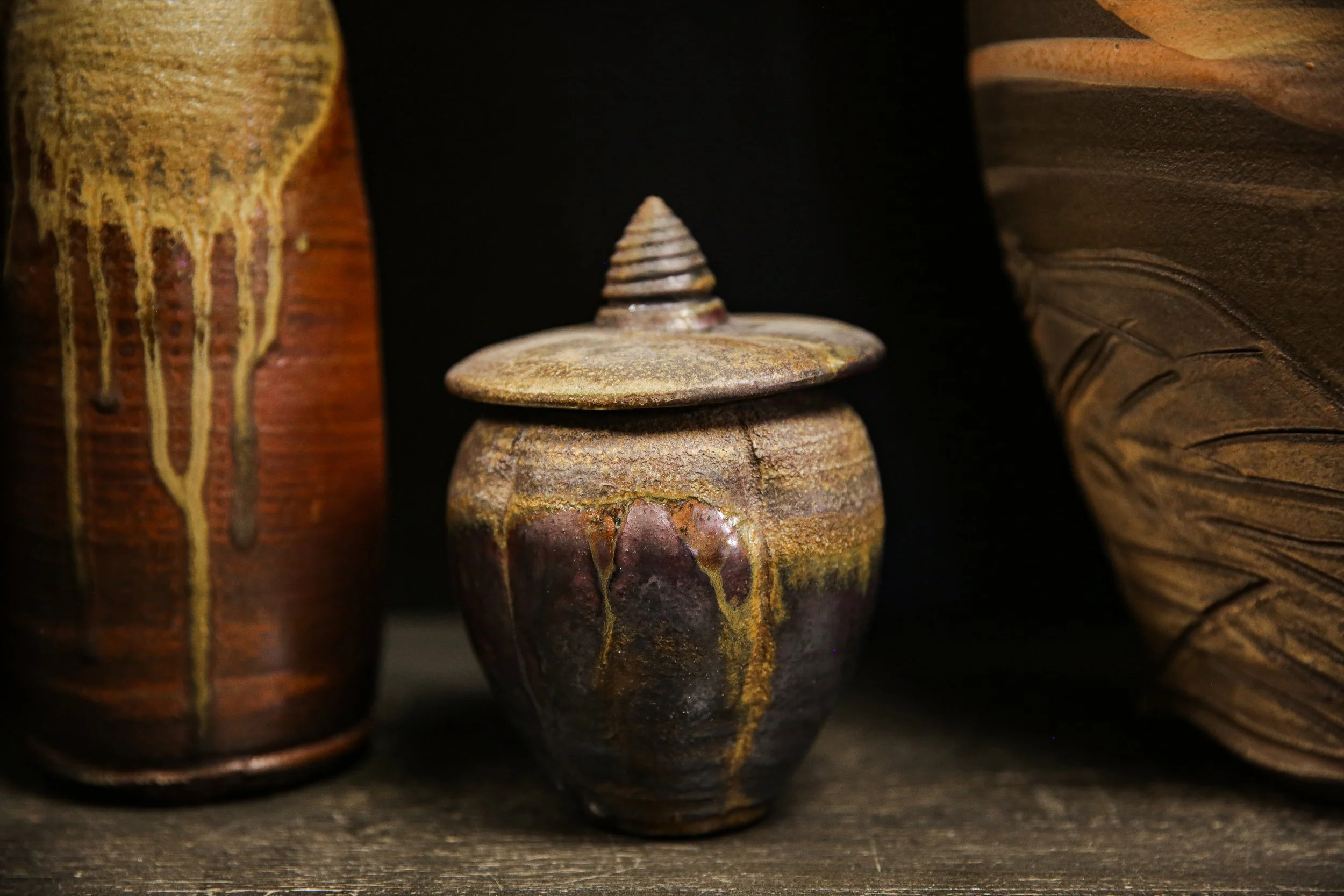
Treasures from The St. John’s Pottery
A behind-the-scenes tour at our inaugural Story Feast gathering
Every Story Feast gathering includes more than a meal. We invite guests to explore the places where they dine, to understand what makes them extraordinary. At St. John's Abbey, that meant offering three optional tours before the cocktail hour. Every single one filled to capacity.
This is what we love about Story Feast guests: you come curious.
A Potter, a Proposal, and Three Hundred Years of Clay
In the late 1970s, a young man named Richard Bresnahan returned to his alma mater with an unusual proposal.
He had just spent nearly four years in Karatsu, Japan, apprenticing with Nakazato Takashi, a 13th-generation master potter and designated National Living Treasure. He'd arrived not knowing a word of Japanese. He left as a certified master potter, carrying with him centuries of tradition and a vision for what pottery could become.
His proposal to the president of Saint John's University: let me start a pottery studio, and let me bring in enough clay from a nearby site to keep it going for three hundred years.
Because it's Saint John's, the president said yes.
Forty-Five Years and Counting
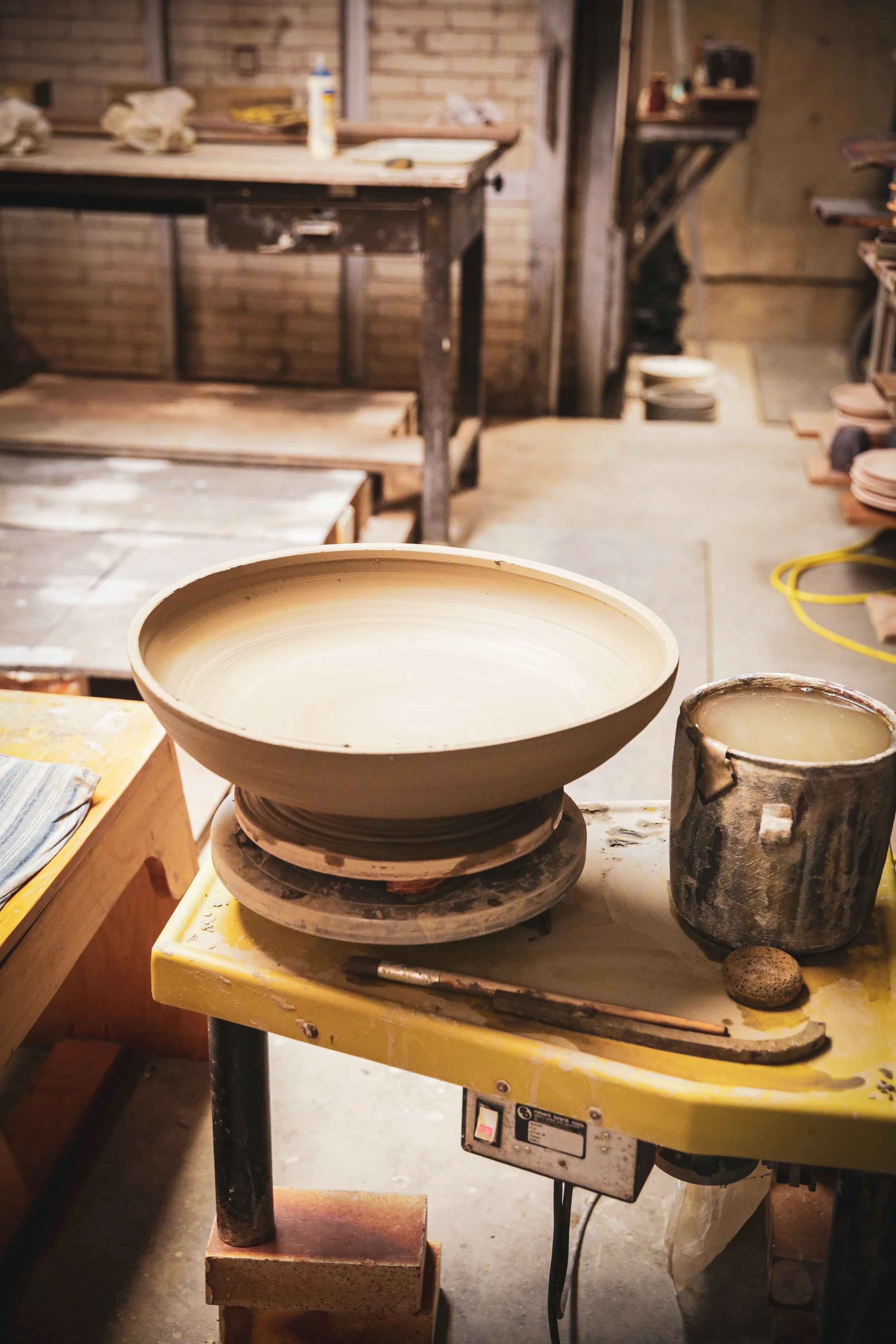
The Saint John's Pottery opened in 1979 in an abandoned root cellar beneath Saint Joseph Hall. Today, more than forty-five years later, Richard Bresnahan is still its director and artist-in-residence and the pottery has become one of the most respected ceramic studios in the country.
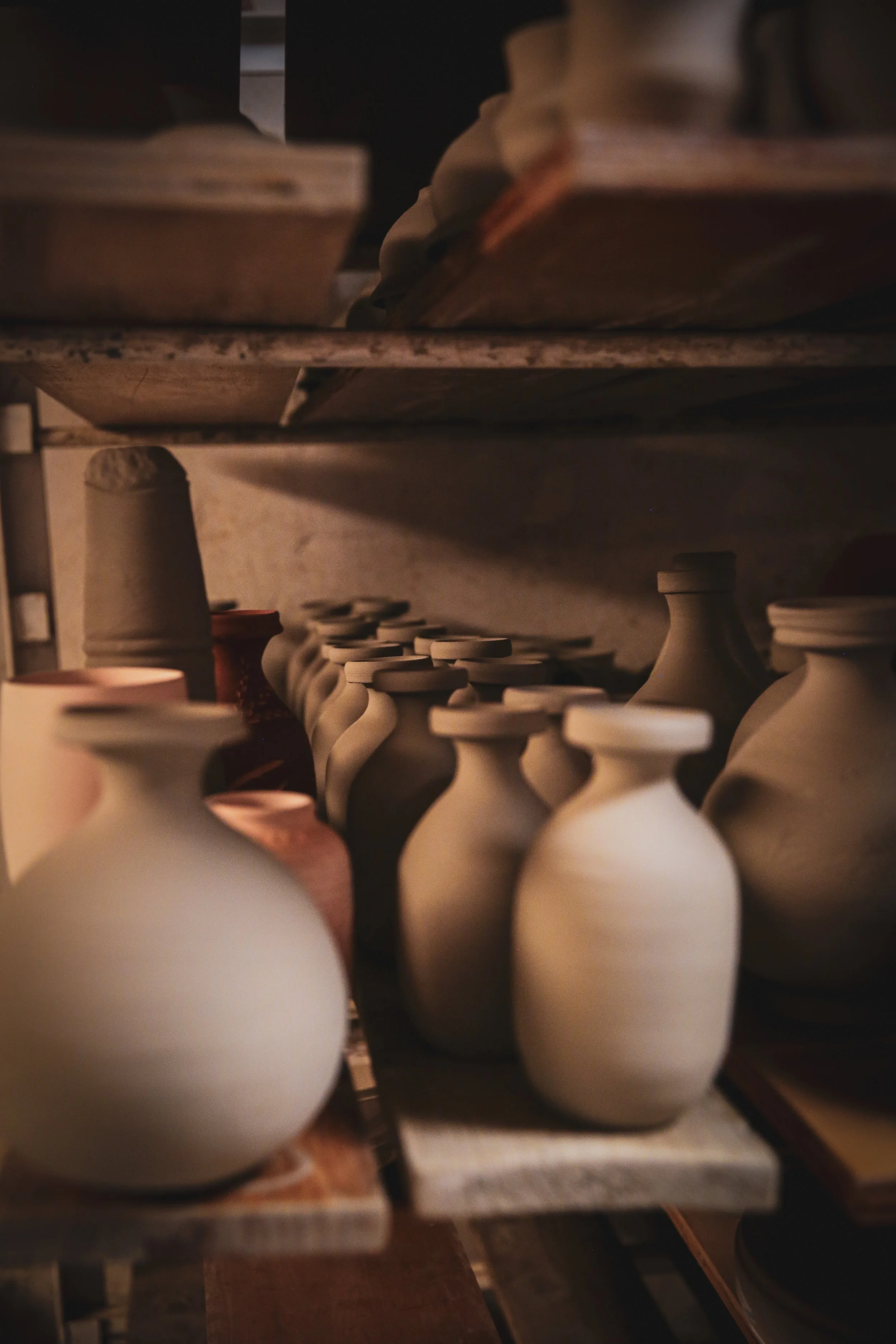
Everything about the studio embodies Benedictine values: sustainability, community, hospitality, the dignity of labor. The clay is mined locally. Glazes are made from ashes, flax, soybean straw, navy beans, sunflower hulls, wood. Water and packing materials are recycled. The massive Johanna Kiln, built in 1994 and named after Bresnahan's mentor Sister Johanna Becker, is the largest wood-fired kiln of its kind in North America, 87 feet long, capable of holding 12,000 pieces in a single firing that takes ten days and sixty volunteers working around the clock.
It's a place where craft is practiced the old way, and where time moves differently.
The Only Paid Apprenticeship of Its Kind
Since 1981, more than fifty apprentices have trained at The Saint John's Pottery. What makes this program unique: every apprentice receives a stipend, room, and board. Since 2016, the benefits package has included healthcare.
It's the only pottery apprenticeship of its kind in the country that pays its apprentices and provides benefits.
The results speak for themselves: every former apprentice is still involved in the creative process, working with clay or other mediums, teaching or running their own studios.
One of those apprentices was JD Jorgensen, who later founded Maine Prairie Studio with his wife Megan. JD brought his infant son along to his shifts in the pottery studio, that baby is now a young man in his twenties who joined us at the dinner alongside his father. Together, JD and Megan crafted every piece of pottery for our Story Feast gathering. (More on their extraordinary work in a future post.)
Tea at Three
Every afternoon at 3 p.m., something beautiful happens at The Saint John's Pottery.
Work pauses. Tea is prepared. And everyone, the master potter, the apprentices, any visitors who happen to be present, gathers around the irori, a traditional Japanese-style hearth at the entrance to the studio. A cast iron kettle hangs from the ceiling, heated by a wood fire below. Tea is poured into handmade cups. Conversation unfolds.
In the words of Saint Benedict: "All guests who present themselves are to be welcomed as Christ."
This is pottery not as production, but as practice. Not as commodity, but as community.
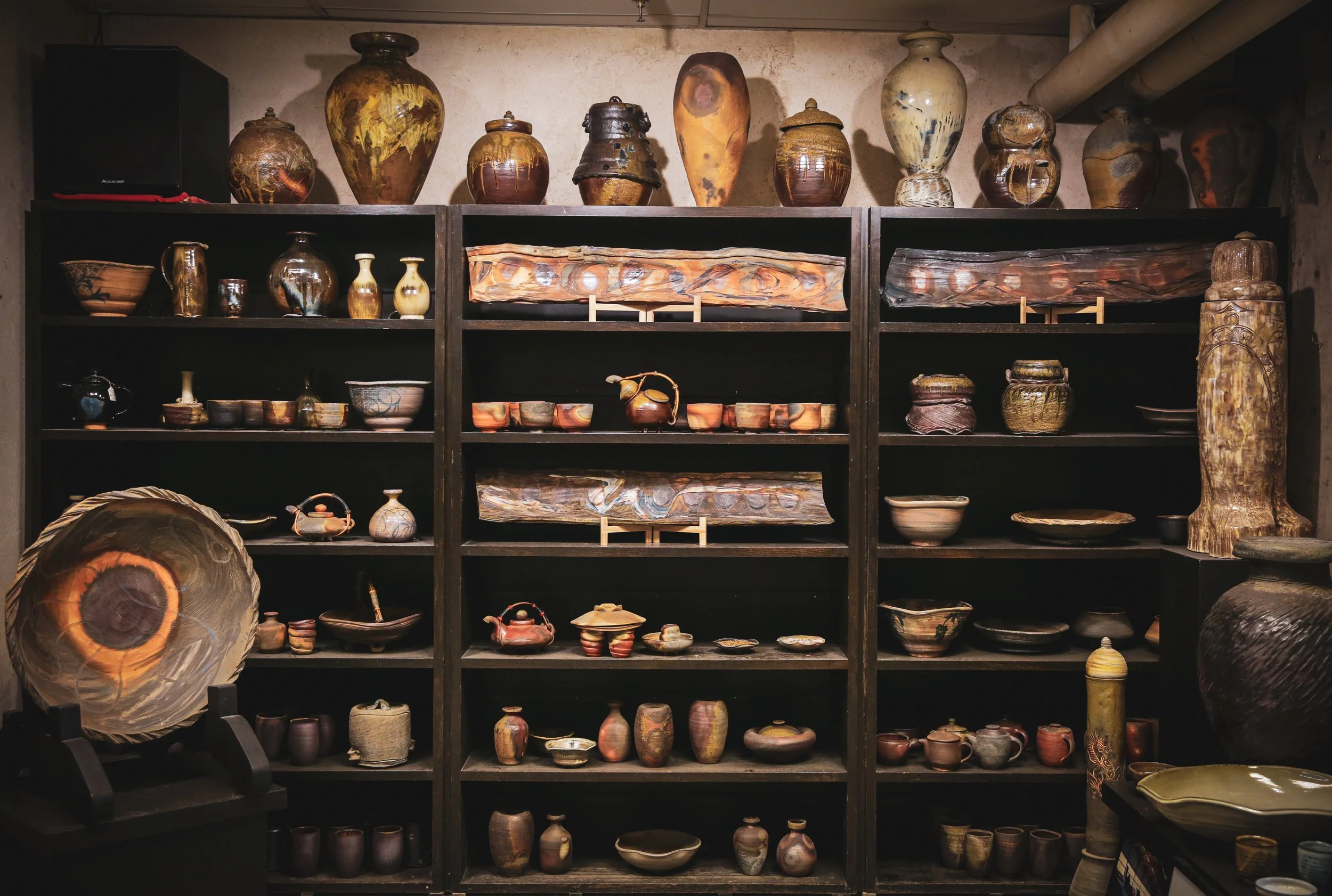
There are seemingly endless shelves of pottery throughout the vast studio
What Guests Experienced
On the evening of our gathering, guests toured the pottery studio, learning about clay processing, glaze development, and the cycles of the Johanna Kiln. They saw where JD Jorgensen had trained, and they understood, perhaps for the first time, how the ceramics on their dinner table had come to be.
They felt what it means to step into a place where time, craft, and intention merge.
Learn more about The St. John’s Pottery →
Looking Ahead: 2026–2027 Season
For our upcoming season, Story Feast tours will be even more expansive. You'll have the option to spend a few days, or just one, or an hour, or not at all (sometimes you just want to feast!) immersing yourself in a place. Visiting locations that define the food culture of the region. Meeting the makers. Understanding the sense of place and identity that makes each location extraordinary.
Because a great meal isn't just about what's on the plate. It's about where you are, who made it, and what that place means.
My newsletter
Every Wednesday in my Substack newsletter, What’s Good Here, I share a new, well-tested recipe alongside guides, how-tos, interviews with inspiring people, and stories about what it means to live a good life. Every other Friday I also share five original recipes plus a step-by-step guide to host a Fantasy Feast inspired by your favorite movies, books and television shows.
Subscribe to What's Good Here →
Interested in partnering with us for a future gathering? See partnership opportunities →
Interested in joining a future gathering? See upcoming events →